Key Takeaways
- Recovery Habits: Consistent hydration, stretching, and sleep routines may help support overnight post-workout body care and comfort.
- Evening Relaxation: Warm baths, gentle movement, and calming body care habits can help the body unwind after physical activity.
- Daily Wellness Support: Balanced nutrition and regular recovery routines may help reduce muscle tightness and support long-term mobility.
Post-workout tightness can happen after workouts, physically demanding schedules, travel, or even everyday activities that place extra strain on the body. While tired muscles are common, they can still make it difficult to relax and feel comfortable at the end of the day. Building a simple evening recovery routine may help support relaxation before bed while encouraging the body to recover overnight. Gentle stretching, hydration, balanced meals, warm baths, and calming body care habits can all become part of a more supportive nighttime routine for overall wellness and comfort.
At Earthly Body, plant-based wellness and body care products are designed to support everyday self-care routines. With naturally derived ingredients, cruelty free formulations, and decades of experience in body care and wellness, the brand continues to create products that fit naturally into active lifestyles and evening recovery habits.
This guide covers how to support tired muscles overnight with simple recovery habits, relaxation techniques, and wellness focused evening routines.

Support Sore Muscles Overnight With an Evening Recovery Routine
Tired muscles can make it difficult to settle into a comfortable evening, especially after demanding workouts, long shifts, travel, or unfamiliar physical activity. Post-workout tightness is a normal response to movement and exercise, but a consistent nighttime routine may help support relaxation and comfort before bed. Gentle stretching, hydration, balanced meals, and calming body care habits can all encourage the body to wind down naturally after a physically active day.
Plant-based wellness routines have become increasingly popular because they fit easily into everyday schedules while supporting self-care and recovery. Instead of waiting until post-activity tightness becomes overwhelming, many people find it helpful to create a simple recovery routine that encourages relaxation each night. Consistency often matters more than intensity when supporting overnight recovery and preparing the body for the next day.
How to Support Sore Muscles After a Long Day or Workout
Post-workout tightness often feels stronger during the evening because the body finally has time to slow down after a busy day. A thoughtful nighttime routine can help encourage relaxation while supporting overall recovery.
Focus on Gentle Movement Before Bed
Complete rest is not always the most comfortable option for tired muscles. Light movement, such as walking, stretching, or yoga, may help encourage circulation while reducing feelings of stiffness. Gentle activity allows the body to stay loose without placing additional stress on tired muscles. Slow stretching sessions before bed may also help release tension that builds throughout the day. Many people find that even a few minutes of controlled movement helps the body feel calmer and more comfortable before sleep.
Create a Calm Evening Recovery Routine
Evening recovery routines work best when they feel realistic and easy to maintain. Taking a warm shower, changing into comfortable clothing, lowering bright lights, and setting aside time to relax can help the body transition into rest mode. Recovery habits do not need to feel complicated to make a difference. Creating a calm environment encourages both physical relaxation and mental rest after demanding activity.
Muscle soreness Relief Tips to Help Your Body Recover Overnight
Post-workout body care often begins with habits that support overall wellness. Recovery is not only about resting tired muscles. It also involves hydration, nutrition, sleep quality, and relaxation throughout the evening.
Stay Hydrated Throughout the Night
Hydration plays an important role in overall muscle function and recovery. Physical activity, heat, and daily movement can all contribute to fluid loss. Drinking water consistently throughout the evening may help support comfort and reduce feelings of tightness the next day. Some people also enjoy herbal tea or electrolyte drinks as part of a relaxing nighttime routine. Staying hydrated supports overall wellness while helping the body recover from daily activity.
Support Recovery With Balanced Nutrition
Balanced meals may help support post-activity routines after physical activity. Protein rich foods are commonly included in post-workout meals because they support muscle maintenance and repair. Fruits, vegetables, healthy fats, and whole grains also provide nutrients that contribute to overall wellness. Magnesium rich foods such as spinach, bananas, nuts, and avocados are often included in recovery focused meal plans because magnesium supports normal muscle function. Pairing hydration with balanced meals can help the body feel more prepared for overnight recovery.
Sore Muscle Support Starts With Hydration And Proper Nutrition
Tired muscle support is often connected to consistent daily habits rather than one quick solution. Evening recovery routines may feel more effective when hydration, movement, nutrition, and rest become part of a balanced lifestyle.
Avoid Habits That Increase Physical Tension
Certain habits may leave the body feeling more tense before bed. Heavy meals late at night, dehydration, and excessive alcohol consumption can contribute to sluggishness or discomfort. Creating a lighter evening routine with nourishing foods and adequate hydration may help support a more comfortable recovery experience. Many people also benefit from limiting screen time before bed to encourage relaxation.
Make Recovery Part of a Weekly Routine
Recovery should not only happen after intense exercise. Adding stretching, hydration, and rest into regular weekly routines may help support long-term comfort and mobility. People with active schedules often benefit from planning recovery days that include light movement and relaxation. Building these habits consistently may help the body feel more balanced over time.

Gentle Stretching Exercises for Muscle soreness Relief Before Bed
Gentle stretching before bed may help encourage relaxation while easing feelings of tightness after physical activity.
- Stretch the calves against a wall while keeping one heel pressed toward the floor.
- Loosen tight hamstrings with seated forward folds and slightly bent knees.
- Release shoulder tension through slow arm circles and neck stretches.
- Ease lower back tightness by pulling the knees gently toward the chest.
- Stretch the hips with seated figure four stretches or gentle lunges.
- Practice slow breathing during stretches to encourage relaxation.
- Hold stretches steadily without bouncing or forcing movement.
How Heat Therapy And Body Care Can Support Sore Muscles
Warm showers, baths, heating pads, and warm towels may help ease feelings of stiffness while encouraging relaxation before bed. Heat therapy is often paired with calming activities such as stretching or reading as part of an evening recovery routine.
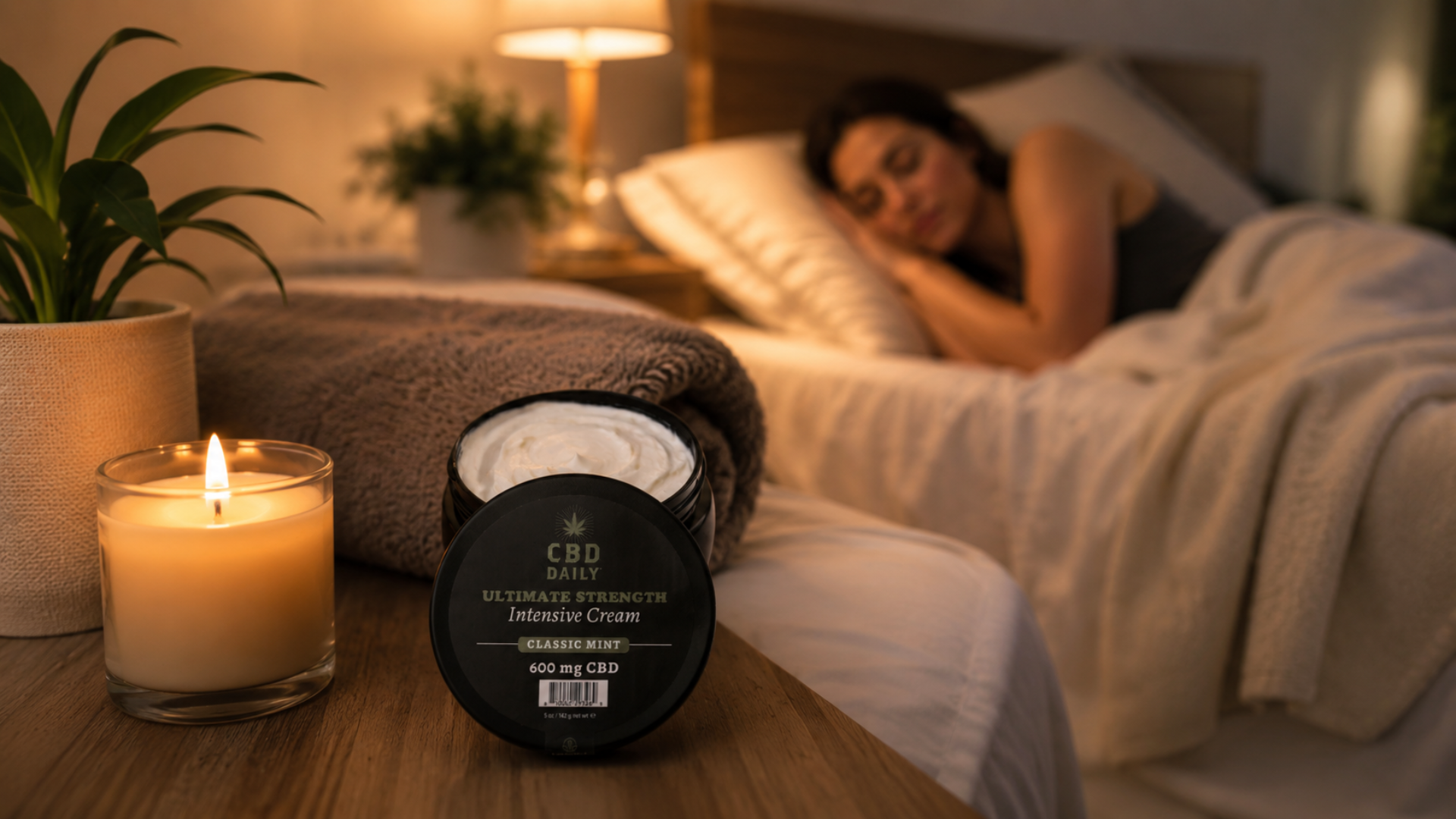
Plant-based lotions, such as our CBD daily intensive cream, massage oils, and moisturizing body care products may also help support relaxation and self-care habits. Gentle massage during application can add to a more soothing nighttime experience.
Sleep Habits That Support Sore Muscle Support and Faster Recovery
Sleep plays an important role in overnight recovery because the body performs many natural repair processes during rest. Creating a calming sleep environment may help support better recovery after physically active days. Comfortable bedding, cooler room temperatures, and reduced lighting can all help encourage relaxation before bed.
Consistent sleep schedules may also help support overall wellness and recovery. Going to bed at similar times each night encourages healthy rest habits that may improve how the body feels the next morning. Some people also prefer supportive pillows or different sleep positions to help reduce pressure on sensitive muscles. Small adjustments to the sleep environment may contribute to greater comfort overnight.
How to Support Sore Muscles Overnight With Consistent Self Care
Learning how to support tired muscles overnight often starts with supportive daily habits. While post-activity tightness may not disappear immediately, gentle stretching, hydration, balanced meals, warm baths, and calming body care routines may help encourage comfort and relaxation before bed. Consistent recovery habits such as mobility work, massage, and proper sleep paired with our triple strength CBD daily intensive cream can also help support active lifestyles and everyday wellness over time.

Final Thoughts
Recovering from tired muscles overnight often comes down to consistency and simple self-care habits. Gentle stretching, hydration, balanced nutrition, restful sleep, and calming evening routines can all help support comfort after physical activity. Creating time to slow down and care for the body each night may help support long-term wellness while making recovery feel like a natural part of everyday life.
Frequently Asked Questions About How to Soothe Sore Muscles Overnight
Can tired muscles feel worse at night?
Yes, post-workout tightness may feel more noticeable at night because the body is no longer distracted by daily movement and activity. Resting muscles can make tightness easier to notice.
How long does post-workout tightness usually last?
Mild post-workout tightness often lasts between one and three days, depending on the intensity of the activity and the body’s recovery habits.
Is it better to use heat or cold for tired muscles?
Heat is commonly used to encourage relaxation and ease tightness, while cold therapy is often preferred immediately after intense activity to help cool and calm overworked areas.
Does drinking water really help post-workout tightness?
Staying hydrated supports overall muscle function and recovery. Water helps the body maintain balance after physical activity and may reduce feelings of stiffness.
Can poor sleep make post-workout tightness feel worse?
Yes, limited or interrupted sleep may affect how the body recovers overnight. Rest plays an important role in supporting overall physical recovery and wellness.
Are massages helpful for tired muscle support?
A gentle massage may help encourage relaxation and reduce tension in tired muscles. Many people include massage as part of a calming evening recovery routine.
Should you exercise while your muscles are sore?
Light activity and gentle movement may feel more comfortable than complete inactivity. Intense exercise on already strained muscles may increase tightness or discomfort.
What foods may help support post-workout body care?
Protein rich foods, fruits, vegetables, healthy fats, and magnesium rich ingredients are often included in recovery focused meal plans that support overall wellness.
Can stretching before bed help tired muscles?
Gentle stretching before bed may help improve flexibility, encourage circulation, and support relaxation after physically demanding activity.
What causes delayed post-workout tightness after exercise?
Delayed post-workout tightness often happens after new or intense physical activity that challenges the muscles more than usual. Symptoms commonly appear several hours after exercise.
Disclaimer: The information provided in this article is for educational and informational purposes only and is not intended to constitute medical advice. The statements made about products or ingredients have not been evaluated by the U.S. Food and Drug Administration. Cosmetic products are not intended to diagnose, treat, cure, or prevent any disease, and individual results may vary. Always read product labels and ingredient lists carefully, and consult a qualified healthcare professional before using any product if you have concerns, sensitivities, or medical conditions. This article does not replace professional medical advice, diagnosis, or treatment.